Spot risks early: Proactive risk management
In project management, risk management is the process of identifying, analyzing, and controlling the risks that can jeopardize a project’s success. It includes preventive measures to spot potential problems early and minimize their impact. Risk management helps you avoid project failures, stay on schedule and on budget, and strengthen stakeholder trust.
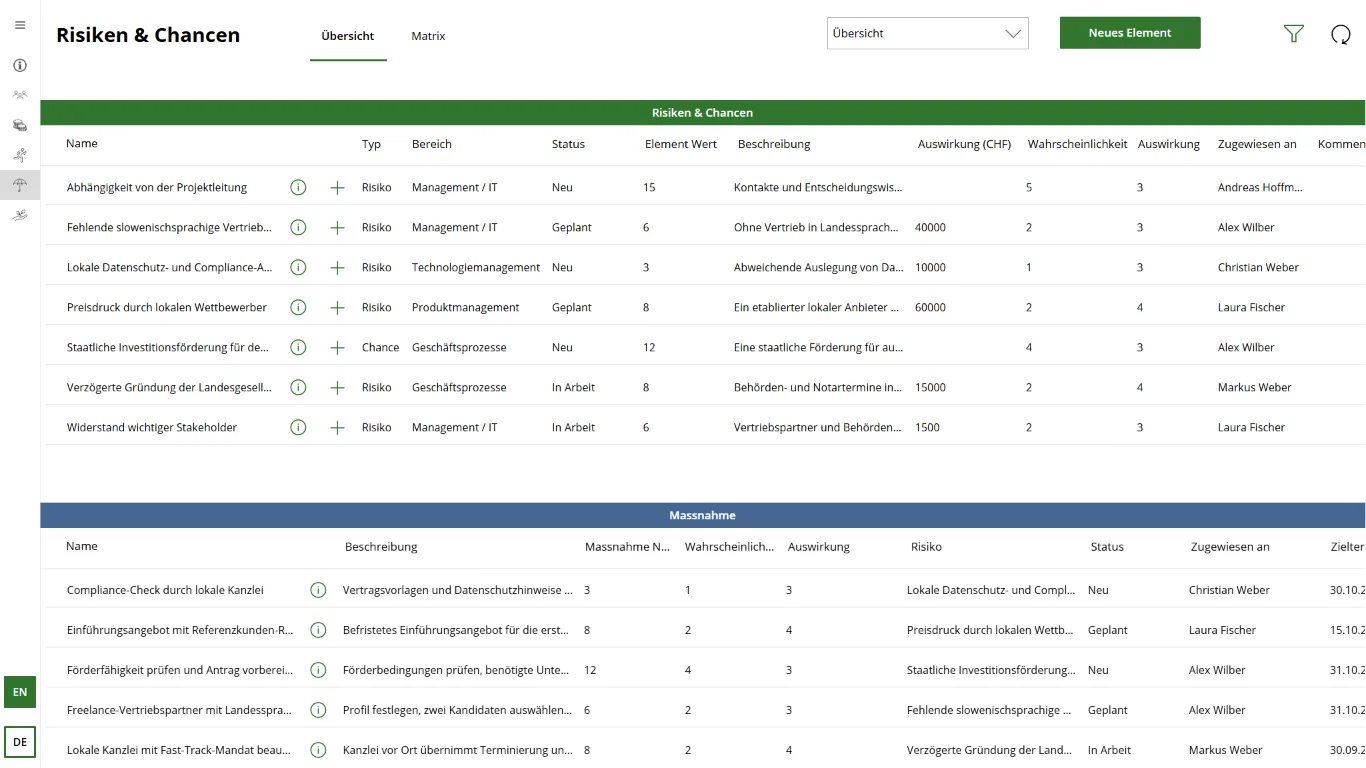
In the Risks & Opportunities area of your project, you can track project risks, make your project’s risk exposure clear, and define suitable countermeasures to limit their impact.
What are the steps in risk management?
- Risk identification
- Risk assessment and analysis
- Developing risk strategies
- Monitoring and control
- Documentation and lessons learned
Conclusion
Well-thought-out risk management goes a long way toward making projects safer and more predictable. It lets organizations actively manage uncertainty, reduce negative impacts, and significantly increase the likelihood that their projects succeed.
Read more: Project management with PlainPPM · Project dependencies in the portfolio · effective resource management